Beijing WanJinLong Color-Coated Steel Products Co., Ltd.

20 years focus on Container houses!
Excellent Quality & 7x24 hours Aftersales Service
Tel & WhatsApp:+8617611653912
Beijing WanJinLong Color-Coated Steel Products Co., Ltd.
20 years focus on Container houses!
Excellent Quality & 7x24 hours Aftersales Service

Prefab Homes
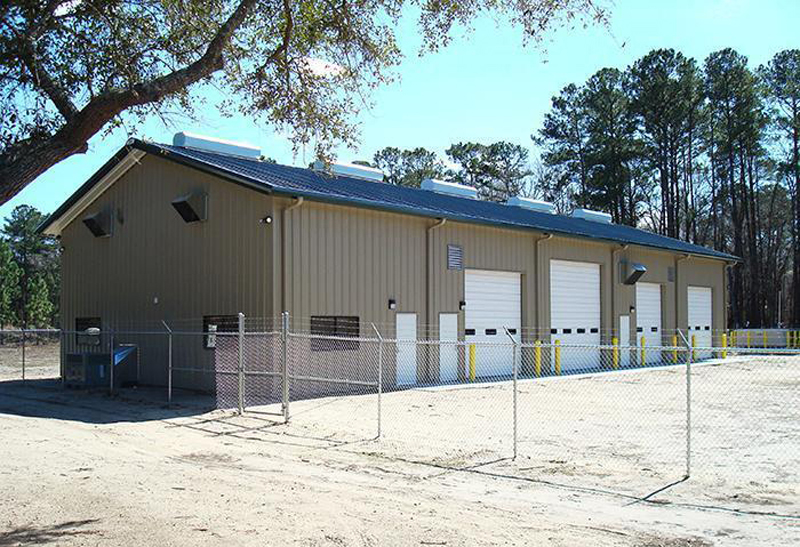
Tool list used in the construction of light steel structure warehouses and precautions for installation of color steel plates and acceptance procedures.Construction scheme of steel structure warehouse...
Tel & WhatsApp:+8617611653912
Product Details
Tool list used in the construction of light steel structure warehouses and precautions for installation of color steel plates and acceptance procedures.
Construction scheme of steel structure warehouse
1. Pre-installation Preparation
1.1 Machinery and Material Preparation
1.1.1 Main Power Tools: hand drill, cutting saw, rivet gun, electric drill, hammer, etc.
1.1.2 Layout & Marking Tools: plumb bob, ink line/chalk line, spirit level, water level, tape measure, marking string.
1.1.3 Hand Installation Tools: screwdrivers, hammers, utility knives, adjustable wrenches, pliers.
1.1.4 Fasteners & Consumables: self-tapping screws, expansion bolts, concrete nails, bolts, rivets, welding rods, screws.
1.1.5 Sealants & Adhesives: silicone sealant (glass glue), caulking gun.
1.1.6 Lifting & Access Tools: mobile scaffolding, crane.
1.2 Material Transportation
1.2.1 Inspect road conditions and select the optimal transportation route.
1.2.2 All materials must be delivered to the installation site.
1.2.3 Select appropriate transportation methods for different components.
1.2.4 Handle all components with care. Do not drag, throw, or subject them to impact.
1.2.5 Load carefully, secure with reliable lashing, and protect items from vibration damage during transit.
1.2.6 Throughout transportation, storage, and construction, implement measures to prevent damage, deformation, or loss of components.
1.3 Material Custody, Inspection & Repair
1.3.1 Designated personnel must be assigned for on-site custody to prevent material loss.
1.3.2 Prior to installation, components must be thoroughly inspected against the detailed packing list. Any missing items must be recorded immediately, noting their weight, specifications, and quantity. Components found deformed or with damaged paint must be repaired promptly. All surface contaminants such as dirt, mud, and dust must be cleaned off immediately.
1.4 Square Tube Installation
Install and reinforce the square tubes on-site strictly in accordance with the steel structure warehouse drawings provided by Party A. All square tubes shall be secured using self-tapping screws.
2. Installation of Color Steel Cladding for the Steel Structure Warehouse
2.1 Installation of Exterior Wall Panels
Install the exterior wall panels according to the layout drawings. Ensure panels are clean before installation.
• Installation direction: Proceed from left to right.
• Panel joints: Must be oriented against the prevailing wind direction.
2.2 Window Assembly Installation
Installation Sequence:
Window sill top/bottom closure profiles → Window frame installation → Window sash installation → Window lock/latch installation → Sealant application.
Procedure:
Adjust the window frame to ensure it is level, plumb, and flush.
Adjust the supports between columns so that the joint between the window frame and column is uniform, both internally and externally.
Apply sealant to all seams: between window sill closures and wall panels, between window frames and columns, and between window frame components. Note: For the window sill closure behind the wall panel, remove the protective film before applying sealant. Seal the ends of the window sill closure with sealant.
Install the window sash.
Install the window locks/latches. Based on the lock position on the sash, install the corresponding latch on the frame. Ensure both latches align perfectly, are securely fastened, and allow for smooth operation (easy to lock and unlock).
2.3 Roof Installation
2.3.1 Steel Roof Panel Installation Sequence:
Main roof panels
Edge/ridge closure profiles (flashing)
Sealant application
2.3.2 Roof panels shall be fastened to the purlins using self-tapping screws. The screw layout pattern is as follows:

Fastening Details: Each roof panel must be secured at every corrugation crest. Additionally, an extra screw is required at the side-lap seam where two panels overlap.
2.3.3 Ridge Cap Installation & Field Modification
The ridge cap shall be connected to the roof panels using 4mm x 20mm rivets.
At the intersection of the ridge cap and the roof panel corrugations, a custom template must be fabricated on-site. Mark the panel accordingly and cut it to fit using tin snips or metal shears.
The cut profile must match the contour of the roof panel corrugations precisely to avoid gaps or misfit.
Critical Alignment: Ensure the centerline of the ridge cap aligns perfectly with the roof's vertical centerline.
After fitting, fasten the ridge cap by installing one rivet in every other corrugation crest along its length.
Apply silicone sealant to all joints and rivet heads.
2.3.4 Gable Side Closure (Barge Flashings) Installation
Connect the gable side closure (barge flashing) to both the roof panels and the gable end using rivets.
Rivet Spacing: Maintain a center-to-center spacing of 400 mm.
Lap Direction: Install the closure panels with an overlap oriented along the direction of water runoff (i.e., upper panel over lower panel).
Apply sealant to all side closure lap joints and rivet heads.
2.3.5 Post-Installation Protection & Inspection
Inspect all roof assembly seams and rivet points. Apply silicone sealant to any areas requiring additional waterproofing.
Safety Notice: Walking on the installed roof panels is strictly prohibited to prevent panel deformation, seam damage, and personal injury.
3. Quality Requirements
3.1 Quality Requirements for Steel Structure Component Installation
3.1.1 The surfaces of all steel components must be clean, free of oil, mud, sand, and dust.
3.1.2 Any coating (paint, galvanization) damaged during transportation, storage, or installation shall be repaired according to the original specification.
3.1.3 All installation work shall comply with the company's internal quality inspection standards for allowable deviations.
3.2 Quality Requirements for Wall and Roof Panel Installation
3.2.1 Roof and wall panels must be installed flat, clean, and aligned. All joints shall be straight, with uniform and tight overlaps in both vertical and horizontal directions. Eaves and wall bottom edges shall form straight lines. There shall be no misplaced drilling. Panels shall be free from warping.
3.2.2 Gable end panels and ridge caps shall be straight, securely fixed, and free from looseness.
3.2.3 All installation work shall comply with the company's internal quality inspection standards for allowable deviations.
3.3 Allowable Deviation for Door and Window Installation
3.3.1 Door and window frames shall be installed level (horizontal), plumb (vertical), and at a consistent height and plane.
3.3.2 The connection between frames and structural columns must be solid and rigid, with no noticeable movement. Gaps around the frame shall be even.
4. Project Acceptance Procedure
4.1 Contractor Self-Inspection
Upon completion of the steel structure warehouse installation, the construction team shall conduct a comprehensive self-inspection. This inspection shall be a general walkthrough, and any issues identified must be rectified immediately.
4.2 Documentation & Reporting
After passing the self-inspection, the team shall complete a Self-Inspection Report and submit it to the Site Supervisor.
4.3 Supervisor-Led Inspection & Formal Acceptance
Based on the self-inspection report, the Site Supervisor shall organize relevant personnel to conduct a formal inspection and acceptance.
The inspection method shall combine a general review with random sampling.
Any defects identified during this inspection must be communicated to the construction team for immediate rectification.
Upon satisfactory completion, the Site Supervisor and other authorized personnel shall sign the Steel Structure Warehouse Acceptance Certificate. This certificate serves as the formal basis for the contractor's payment settlement and project closure.
4.4 Client (Party A) Handover Acceptance
Project Scale Responsibility:
Small Projects: Managed by the Site Director.
Medium Projects: Managed by the Installation Manager.
Large Projects: Managed by the Company's Production Manager.
The responsible manager shall invite the client (Party A) and other relevant parties to conduct a final handover acceptance.
Any issues raised by Party A shall be addressed on a case-by-case basis.
Upon approval, the Project Handover Acceptance Slip shall be issued.
4.5 Quality Control Principle
Quality inspection shall be an integral part of the entire production and installation process. Inspectors at all levels must proactively identify and resolve potential quality issues at the earliest stage, aiming to prevent defects rather than merely detecting them upon completion.
4.6 Record Keeping & Archiving
Upon completion of all acceptance procedures, all results and documentation (including Self-Inspection Reports and Acceptance Slips) shall be recorded in detail, properly archived, and made available for future reference.
Staffing table for personnel and mechanical equipment
| Type of work | Staff(quantity) | Notes |
| Welders | 1 | |
| General worker | 8 | |
| Electrician | 1 | |
| Total | 10 |
5. Portal Frame Scaffolding Installation & Safety Notices
5.1 Compliance Standards
The span of the portal frame must comply with the current industry standard "Steel Tubular Portal Frame Scaffolds" (JGJ 128) and be compatible with the specifications of the cross bracing.
5.2 Personal Protective Equipment (PPE) for Dismantling
When dismantling scaffolding, all workers must wear safety helmets, full-body harnesses, and anti-slip shoes.
5.3 Cross Bracing Installation
Cross bracing must be installed on both the inner and outer sides of the portal frame and securely locked using the locking pins on the frame uprights.
5.4 Technical Safety Measures
(1) Incompatible or mismatched portal frames and accessories shall not be used on the same scaffold.
(2) During erection, cross bracing, ledger frames (or working platforms) must be installed immediately following the placement of each portal frame unit. The working platform must be fully decked at each level before use.
(3) All locking devices and couplers connecting the portal frame and its accessories must be fully engaged and secured.
(4) Erected scaffolding must pass a quality and safety inspection before being put into service.
(5) Scaffold erectors must be in good health and possess certified, proficient operating experience. Personnel must pass regular medical examinations and hold valid certificates to work on-site.
(6) Erectors must wear safety helmets, full-body harnesses, and anti-slip shoes.
(7) The quality of scaffolding components and erection must be inspected and accepted according to this code's provisions. Use is permitted only after passing inspection.
(8) The construction load on the working platform must not exceed the design specifications. Overloading is strictly prohibited. Suspending lifting equipment from the scaffold is forbidden.
(9) Regular safety inspections and maintenance of the scaffold must be performed as stipulated. Special fire prevention measures and dedicated fire watch personnel are required for any hot work (e.g., welding, cutting) conducted on or near the scaffold.
(10) Stability Requirements for Mobile Portal Scaffolds:
* Height > 3m: Requires secure connection of at least two scaffold units.
* Height > 5m: Requires secure connection of at least three scaffold units.
(11) Given the indoor atrium application in this project, additional tie-in points and supports shall be added at locations such as the concrete floor slab of the elevator core wall and existing railings to enhance overall stability.
5.5 Erection Sequence
Align base plates → Position base jacks → Erect portal frames from one end, installing cross bracing concurrently → Install ledger frames (or platforms) → Install longitudinal tie tubes → Repeat steps layer-by-layer upward → Install diagonal bracing (scissors braces) → Install top guardrails and toe boards.
5.6 Supervision
The erection of the portal frame scaffold must be conducted under the supervision of a competent person to ensure structural stability.
5.7 Synchronization of Bracing
The installation of longitudinal tie tubes and diagonal bracing must meet structural design requirements and proceed in sync with the frame erection.
5.8 Attachment of Bracing Members
Longitudinal tie tubes shall be fastened to the inside of the uprights using couplers. Diagonal braces shall be fastened to the outside of the uprights using couplers.
5.9 Passageway Protection
A secure guardrail (seal bar) must be installed at any open side of a passageway through the scaffold.
5.10 Fall Protection
Adequate fall protection, such as debris nets or equivalent systems, must be installed beneath the working platform, around vertical ladders, and at any other necessary locations to prevent objects from falling.
Previous: Portable toilet container houses